
What readers ask first
Are North Korean troops fighting inside Ukraine?
Confirmed North Korean ground combat has been in Russia's Kursk region. Public evidence does not yet verify North Korean ground units fighting inside Ukraine's internationally recognized borders.
How many North Korean troops has Pyongyang sent?
Public estimates indicate roughly 14,000 to 15,000 personnel were sent to Russia from late 2024. Claims that another 30,000 to 50,000 may be prepared remain uncorroborated and should not be treated as a confirmed deployment.
What weapons has North Korea supplied to Russia?
The strongest public record points to millions of artillery rounds, large container shipments, and more than 100 ballistic missiles during 2024. Estimates vary by source and period.
Why does this matter on the Korean Peninsula?
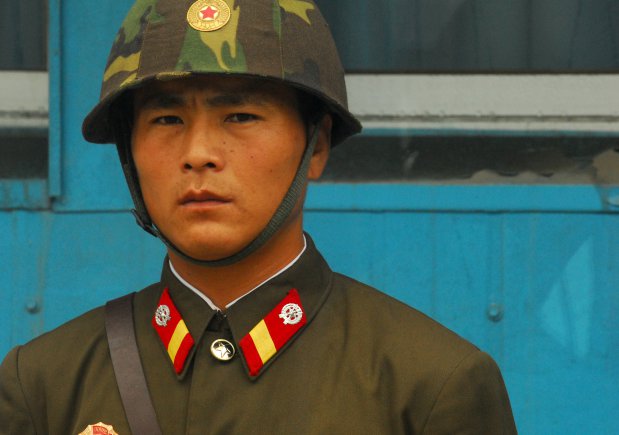
The Korean People's Army is gaining recent combat experience with drones, electronic warfare, artillery, missiles, logistics, and casualty-heavy operations—experience it had not accumulated at this scale since 1953.
Volodymyr Zelenskyy's latest warning is designed to stop a reader cold: Moscow, he said, has settled on bringing tens of thousands more North Koreans onto Russian soil. The upper figure now circulating is 50,000.
That number is not yet a measurement. No timetable, allied confirmation, transportation evidence, or independent documentation has made it public. Treat it as a marker of Ukrainian concern—not a confirmed order of battle.
Evidence check: The partnership, arms transfers, missile use, and earlier troop deployment are extensively documented. The proposed 30,000–50,000 follow-on force is not independently verified.
How a weapons pipeline became a battlefield partnership
The sequence is clearer than any single headline. Commercial satellite imagery showed container traffic through North Korea's Rajin port beginning in September 2023. Russia vetoed renewal of the United Nations Panel of Experts in March 2024, ending the principal international monitoring mechanism a month later. Eleven governments then created the Multilateral Sanctions Monitoring Team in October.
Between those two events, Vladimir Putin and Kim Jong Un signed a comprehensive strategic partnership treaty on June 19, 2024. Article 4 promised military assistance if either country faced armed attack. About four months later, North Korean troops began arriving in Russia.
The ledger: troops, shells, missiles, losses
Most of the deployed personnel have been associated with the Korean People's Army's 11th Corps, often called the Storm Corps. Their confirmed ground combat occurred in Russia's Kursk region after Ukraine's 2024 cross-border incursion. Public casualty estimates diverge sharply, reflecting different dates, definitions, and intelligence access.
The munitions pipeline may be strategically more important than the troop count. The MSMT documented large container transfers and associated estimates running into millions of rounds. Physical missile remnants recovered in Ukraine have also provided serial and component evidence that cannot be dismissed as a satellite-image interpretation alone.
What changed this summer
Ukrainian reporting has described a roughly 90-person North Korean missile unit that may be attached to Russia's 112th Missile Brigade in the Voronezh region. If accurate, the deployment would be a qualitative shift: North Korean personnel would be participating more directly in the operational missile chain rather than serving only as infantry or advisers.
On August 11, Ukrainian officials attributed ballistic missiles used in a deadly Zaporizhzhia attack to North Korea. The attribution came from Ukrainian authorities; the civilian casualties were reported independently. That distinction matters. The public can be confident an attack occurred while still labeling the weapons attribution correctly.
What Kim Jong Un is taking home
Russia can pay in cash, oil, food, diplomatic protection, and military technology. The more consequential return may be institutional knowledge. North Korean units have now encountered dense drone surveillance, first-person-view strike systems, electronic warfare, contested communications, modern camouflage problems, casualty evacuation under observation, and the unforgiving tempo of an artillery-heavy battlefield.
Veterans returning as instructors can distribute lessons far beyond the original contingent. Reports that thousands have already returned home raise the possibility that combat practices will move into Korean People's Army training cycles, manuals, exercises, and force design.
The part that matters at Panmunjom
The Korean People's Army had not accumulated sustained combat experience on this scale since the armistice in 1953. That does not mean Russia's war has transformed it into a uniformly modern force. North Korea still faces old equipment, rigid command structures, limited combined-arms practice, and severe logistics constraints.
But even a costly apprenticeship teaches. It reveals which formations adapt, which communications fail, how drones expose movement, how small units survive under constant observation, and what kind of ammunition a prolonged war consumes. Those lessons can shape planning along the DMZ even if no returning soldier ever deploys there.
The most important shipment to Pyongyang may not be a weapon. It may be a body of hard-earned knowledge about how modern wars punish armies that stand still.
What we know—and what remains open
The strongest evidence comes from satellite imagery, recovered missile components, court-quality serial analysis, official treaty language, and the 11-nation MSMT report. Troop and casualty figures remain estimates. Assertions about a new 30,000–50,000-person force still lack public corroboration. And the MSMT's first report largely closed its evidentiary window in April 2025, before the newest claims.
The responsible conclusion is narrower than the loudest headline and more serious than a dismissal: North Korea is already using Russia's war as a military classroom. The unresolved question is how much larger that classroom is about to become.
Read the record
- Unlawful Military Cooperation including Arms Transfers between North Korea and RussiaMultilateral Sanctions Monitoring Team — Evidence through April 2025
- Zelenskyy claims Russia seeks to bring 30,000 North Korean troops for warReuters Connect — Claim attributed to Ukraine's president
- Russian attacks kill 10 as Zelenskyy says Moscow is getting more North Korean missilesAssociated Press — August 11, 2026
- Release of the First Report of the Multilateral Sanctions Monitoring TeamMinistry of Foreign Affairs of Japan