
What readers ask first
What was the Panmunjom ax attack?
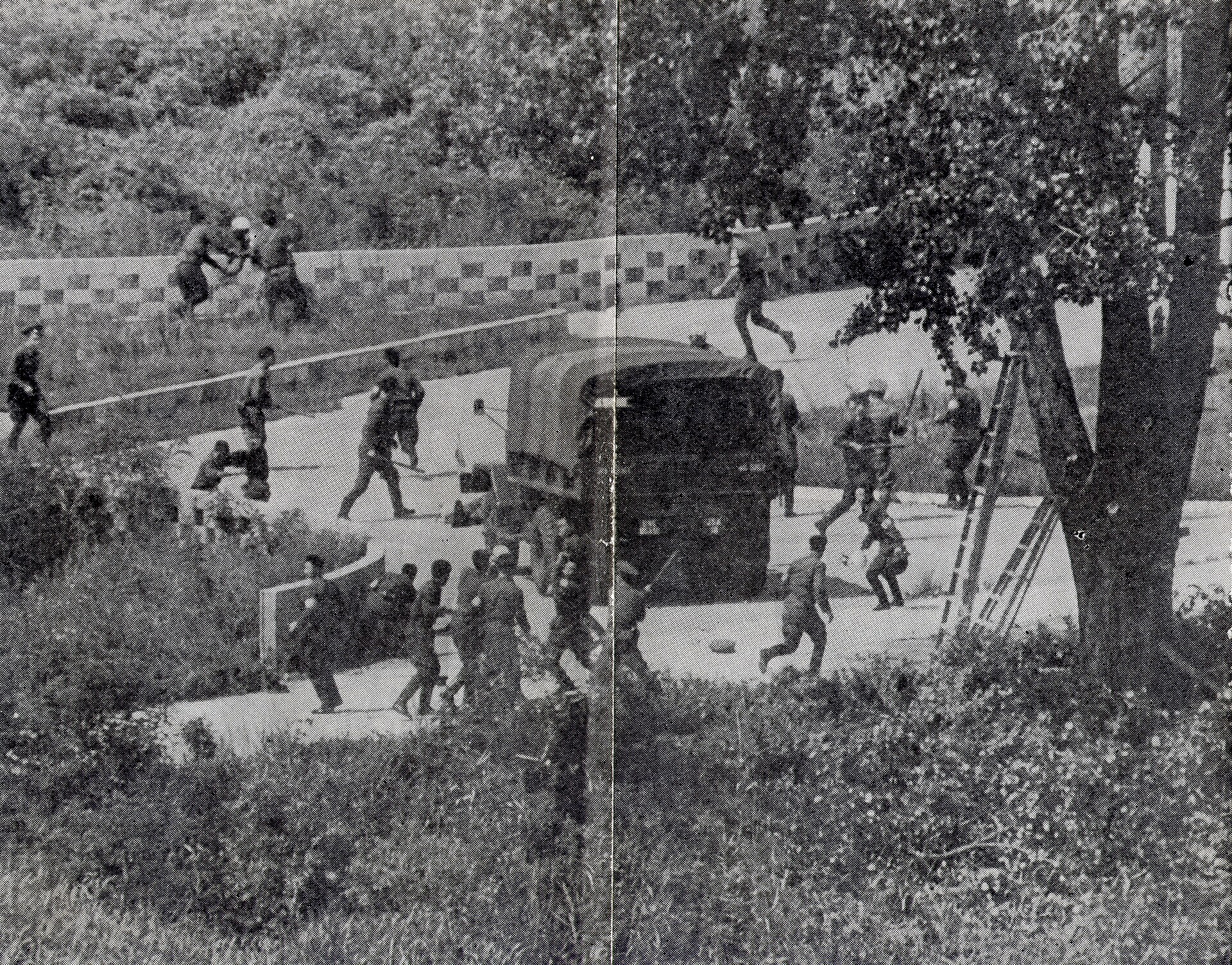
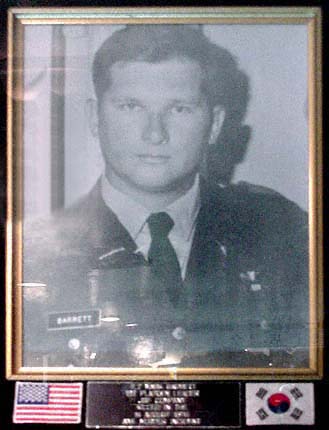
On August 18, 1976, North Korean soldiers attacked a U.S.–South Korean work party pruning a poplar tree in the Joint Security Area. Capt. Arthur Bonifas and First Lt. Mark Barrett died after being beaten with axes and other implements.
What was Operation Paul Bunyan?
Three days after the killings, the United Nations Command sent a heavily protected force into the Joint Security Area to cut down the tree. The show of force succeeded without a new exchange of fire.
Did North Korea apologize?
Pyongyang called the killings ‘regrettable.’ North Korean and allied archival accounts describe that wording as a statement of regret, not an apology; the original Korean text has not been publicly released.
Two American families will walk into the Joint Security Area at Panmunjom in the Korean DMZ on Tuesday, according to South Korean media.
They visit to honor Captain Arthur Bonifas and First Lieutenant Mark Barrett, beaten to death with axes by North Korean troops on Aug. 18, 1976.
At the same time, US and South Korean commanders have been preparing for an annual exercise designed to prepare for, and deter, North Korean aggression against the South. But on Sunday, hours before the US/South Korean Ulchi Freedom Shield exercise was to begin, President Trump posted that joint exercises with South Korea send a signal that is “totally inappropriate and hostile,” called North Korea “unthreatening and respectful,” “I have instructed Secretary of War, Pete Hegseth, to substantially reduce the Joint Military Exercises!” He cited cost and his relationship with Kim Jong Un. Seoul’s defense ministry said the drills would “proceed as previously notified and scheduled.”
America’s mixed messages to North Korea have a long history, as do regrets among US leadership about weak responses to North Korean attacks on US troops. The communist strategy, President Nixon wrote after Pyongyang shot down a US reconnaissance plane, is: “Probe with bayonets. If you encounter mush, proceed; if you encounter steel, withdraw. I had feared in our handling of the EC-121 incident in 1969 (which killed 31 Americans) the Communists may have thought they encountered mush.” Seven years later, Henry Kissinger joked about America’s weak response to the ax attack. For a longer account of the pattern, read “American Presidents Trained North Korea to Ignore Our Threats”. See more below, including AI summaries of some of our earlier reporting and historical documents posted on the site.

Bonifas and Barrett were escorting a Korean work party pruning a poplar that blocked the sightline between a UN Command checkpoint and an observation post in the Joint Security Area, a meeting place for US/South Korea and North Korean representatives to the Military Armistice Commission (MAC) monitoring adherence to the Armistice that ended combat in the Korean War. About fifteen North Korean soldiers under Senior Lieutenant Pak Chol told them to stop. Bonifas ordered the cutting to continue. Pak took off his wristwatch, wrapped it, and gave the order to attack. A truck brought roughly twenty more men with crowbars and clubs, and they picked up the axes the pruners had dropped. It was over in twenty to thirty seconds. Bonifas was beaten to death on the spot. Barrett died of his wounds soon after.
The United States answered three days later with Operation Paul Bunyan. General Richard Stilwell put forces at DEFCON 3 and sent a convoy into the Joint Security Area at seven in the morning on 21 August. Army engineers cut the tree down with chainsaws while B-52s from Guam flew overhead under fighter escort, F-111s and Phantoms orbited, Cobra gunships circled, and the carrier Midway stood offshore. Twelve thousand additional troops were ordered to Korea. A sixty-four-man South Korean special forces detachment came in alongside the engineers and destroyed four North Korean guard posts on its own initiative.
The tree was down in forty-two minutes. An eight-foot stump was left standing. Between 150 and 200 North Korean troops arrived by bus, set up machine guns, and did not fire. That night Pyongyang requested a meeting and called the killings regrettable — perhaps the only such statement any North Korean leader has ever made over dead Americans.
Kissinger’s “Joke”
At 8:04 p.m. on 20 August 1976, with the bodies not yet home, Henry Kissinger telephoned Brent Scowcroft.
“We are shipping home those two guys in a coffin made out of that tree,” Kissinger said. “We also are doing a systems analysis study of how many Americans they have to kill before we have deforested them and changed their climate.”
“It is a great success,” Scowcroft said.
“They can’t stop us from pruning trees for Christ’s sake.”
“I am sorry they didn’t make a challenge out of it.”
“I am sorry we didn’t decide to hit the barracks. I am not sure we still shouldn’t do that.”
Operation Paul Bunyan is remembered as deterrence working. B-52s, F-111s, the carrier Midway, the tree down in under an hour, and a message of regret from Kim Il Sung. Kissinger thought it was too small.
“Now they see us just chopping down a tree — which looks ridiculous,” he told Scowcroft. “Habib tells me it was illegal to fire across the zone.”
“God Henry. So it is not illegal to murder people.”
“No, that was wrong but not illegal.”
A page later Kissinger asks Scowcroft to hold while he switches phones — “I don’t want Habib to have another heart attack.” The transcript notes: (Kissinger goes to another phone).
“What do you think about shelling them after all?”
“I don’t think it is a bad idea,” Scowcroft said.
Kissinger’s only objection was congressional. Later: “What we should have done is to hit them — is to do the tree, pull out and shell the barracks and say now it is over. The instructions should have been if there is a fracus you have a pretext, but if there isn’t you pull out and hit them anyway.”
“Probably,” Scowcroft said. “I feel very unfulfilled about it all. I still don’t think we have done enough.”
They agreed to take it to President Ford, who had gone to play golf. The barracks were not struck.
The transcript is in the DMZ War 1976 file.
What Kim Il Sung said
Six weeks later Kim Il Sung received an East German military delegation and gave his own account. The record survives in the German military archives. It has not been reported.
“First, Kissinger demanded that we apologize and punish our soldiers,” Kim told defense minister Heinz Hoffmann. “However, we have no reason to sanction our comrades since they just acted as good patriots.”
“To the contrary,” Hoffmann said, “you must commend them.”
Then the line that settles fifty years of argument about the message of 21 August:
“We declared to the Americans that we regret the incident, but we did not concede anything on reparations.”
Kim put the killings in a sequence. “In 1968, Johnson staged the Pueblo affair, Nixon organized the incident with the spy plane EC-121, and now Ford in 1976 attempted in Panmunjeom to use a little tree to stir up the entire world.” Both were North Korean attacks on Americans. He was calling them American provocations.
The word North Korea buried
Ten days after the killings the acting East German ambassador in Pyongyang wrote to Berlin:
“Even the DPRK Deputy Foreign Minister, Comrade Han Shi Hae, was willing to concede on August 25, and only after repeated pressure from representatives of socialist states convened to a briefing, that [Kim Il Sung’s] response called the incident as ‘regrettable’. Though the DPRK comrades are energetically refuting it, this still represents a certain concession they want to keep secret from their people for matters of prestige.”
An allied diplomat watched Pyongyang hide the word from its own citizens and wrote down why.
It held. There is no published Korean text of the message anywhere, north or south. The Encyclopedia of Korean Culture and RFA’s Korean service call it Kim Il Sung’s 유감성명, his statement of regret, and neither quotes it. The word is always 유감, regret. Never 사과, apology. North Koreans get the opposite. RFA found the regime’s own propaganda site drops the message and says 미국이 먼저 흰기를 들고 나왔다 — the United States was the first to raise the white flag.
Three Corrections to History
The CIA said premeditated. State did not. The President’s Daily Brief the morning after the killings, in our declassified records, has CIA saying “Pyongyang almost certainly intended US casualties.” In the same brief, State’s Bureau of Intelligence and Research “does not believe current information is sufficient to be certain that yesterday’s incident was planned from Pyongyang.” The East German embassy agreed with State, calling it an over-reaction rooted in “fanatical feelings of hate.” The confident version is the one that got into the books.
The helicopter was not shot down. The Pentagon’s news service says the task force commander’s helicopter was “brought down.” The Daily Brief written hours after the operation: “One round struck the tail rotor pylon; there were no casualties, and no fire was exchanged.”
The line splitting Panmunjom was North Korea’s idea. Before 1976 both sides walked the whole Joint Security Area. Pyongyang proposed the split. At a White House meeting on 25 August 1976, Kissinger said: “I want to play it as a concession on the part of the North Koreans.” Deputy Defense Secretary William Clements: “Henry’s saying make it look like we kicked them out.” The UN Command had asked for that same division in 1953 and 1970 and been refused twice.
Recent events in Korea and the DMZ
Current North Korean dictator Kim Jong Un, grandson of Kim Il Sung, the leader during the ax attack, declared the South the primary foe in 2024 and had the Arch of Reunification torn down. The constitution was rewritten this year to remove reunification and bound the country by “the Republic of Korea” to the south. Kim Yo Jong said last month that denuclearization had lost its meaning. He can wait: 9,500 North Korean troops were still in Kursk this month and Moscow is paying.
Inside the JSA the 2018 demilitarization deal is dead. Guards on both sides carry sidearms again. On 19 December 2025 the UN Command closed the blue conference buildings to visitors. Fifty years after two American officers were killed there, nobody goes in the huts.
Outside, the North is building a wall. 중앙일보 reports three to five thousand troops on DMZ fortification, finishing within two years. Seoul told the UN Command in June this “is a clear violation of the Armistice Agreement.” The UN Command said fortification does “not automatically constitute violations.” Pyongyang says it went further than that: in a statement last August, Lieutenant General Ko Jong Chol claimed “even the U.S. forces side accepted this as a sincere measure for détente.” USFK and the UN Command have not answered whether that is true. It is the first question DMZ War would put to them.
On 14 August the UN Command backed off a reorganization of the Camp Bonifas security battalion after Seoul read it as Washington taking control of the DMZ. On Sunday South Korean troops fired warning shots at North Korean soldiers crossing the line, the first of the year.
More from DMZ War: The 1976 file · Korean DMZ history · 1966–1969 · Declassified records · North Korea Watch · RGB / GRIB dossier · US Army defectors
A request from DMZ War
Many Americans who served in Korea never came home. More than 7,000 Americans remain POW/MIA from the Korean War. The POW Investigative Project, a non-profit investigative reporting and crowdsourcing project, seeks clues on the fate of Americans reported captured but never returned by North Korea, China and the Soviet Union, along with US POWs from the Vietnam War reported in North Korea.
If you have information on these missing men, please visit www.powinvestigativeproject.org.
한국에서 복무했던 미국인들 가운데 끝내 고국으로 돌아오지 못한 이들이 많습니다. 한국전쟁에서 발생한 미군 전쟁포로·실종자(POW/MIA)는 지금도 7,000명이 넘습니다. POW Investigative Project(미군 포로·실종자 조사 프로젝트)는 비영리 탐사보도·크라우드소싱 프로젝트입니다. 저희는 북한·중국·소련에 포로로 붙잡혔다고 보고되었으나 끝내 송환되지 않은 미국인들, 그리고 북한에 있는 것으로 보고된 베트남전 미군 포로들의 행방에 관한 단서를 찾고 있습니다. 이 실종 장병들에 관해 알고 계신 정보가 있다면 www.powinvestigativeproject.org를 방문해 주십시오.
Notes on sources
The documents
Kissinger–Scowcroft telephone conversation. Telcon, General Scowcroft / Secretary Kissinger, 20 August 1976, 8:04 p.m. Four pages. U.S. Department of State, FOIA case No. F-2001-02979, document No. C18093011, marked RELEASE IN FULL, released 24 July 2015. Held by DMZ War. Quotations verified line by line against the original scanned page images. Not held at a public URL — post the scans with the story.
Kim Il Sung and Heinz Hoffmann, 5 October 1976. “Report on a Stay of a GDR Military Delegation in the DPRK in October 1976,” reported by GDR Defense Minister Heinz Hoffmann to Erich Honecker, meeting notes by Helga Picht. German Federal Archive, Military Archive (BA-MA), AZN 8283. Translated for the North Korea International Documentation Project by Bernd Schaefer. Wilson Center Digital Archive record 114292. Publicly linkable.
The concealment cable. “Report on the ‘Axe Murder Incident’ from the GDR Embassy in North Korea,” Acting Ambassador Steinhofer to the Foreign Ministry, 31 August 1976. Political Archive of the Federal Foreign Office, Berlin (PolA AA), MfAA. Translated for NKIDP by Bernd Schaefer. Wilson Center Digital Archive record 114291. Publicly linkable. Note the same document contains Steinhofer’s independent assessment that the killings were an unplanned “over-reaction.”
President’s Daily Brief, 19 August 1976. CIA-RDP79T00024A000200020003-1, declassified in part 2016/07/18. Source of both the CIA “almost certainly intended US casualties” line and the State/INR dissent. Held by DMZ War. No public URL.
President’s Daily Brief, 21 August 1976. Source of the helicopter correction and the contemporaneous account of Paul Bunyan: 38 US and 60 South Korean personnel in the work party, two North Korean barriers removed, area cleared in about ninety minutes, MAC meeting convening 10:45 p.m. EDT. Declassified in part 2016. Held by DMZ War. No public URL.
President’s Daily Brief, 26 August 1976. Source of the finding that the UN Command had itself proposed dividing the JSA in 1953 and 1970, and that only North Korea would have to move guard posts to implement its own proposal. Declassified in part 2016. Held by DMZ War. No public URL.
Washington Special Actions Group, 25 August 1976, 10:30 a.m., White House Situation Room. Kissinger chairing; Habib, Clements, Gen. George Brown, CIA Director George Bush, Hyland and Gleysteen present. Declassified A/ISS/IPS, Department of State, E.O. 12958 as amended, 27 February 2009. Held by DMZ War; summarized publicly in FRUS 1969–1976, Vol. E-12, doc. 286.
FRUS 1969–1976, Volume E-12, Documents on East and Southeast Asia. Korea compilation, docs 230–290. Doc 283 is Telegram 206084, State to Embassy Seoul, 19 August 1976 0110Z, drafted Hurwitz, approved Kissinger — the DEFCON 3 notification to Park Chung Hee, not the message. Doc 287 is Telegram 213541 of 27 August 1976, the “APOLOGETIC MESSAGE” cable. There is no document for 21 August.
Provenance of the quoted message text. Reed R. Probst, “Negotiating With the North Koreans,” U.S. Army War College, 16 May 1977, is the earliest known publication of the wording; Don Oberdorfer, The Two Koreas (1997), pp. 74–83, is the source everyone cites. A materially different, unfootnoted rendering appears in Col. Conrad DeLaTeur, Murder at Panmunjom: The Role of the Theater Commander in Crisis Resolution, Foreign Service Institute 29th Senior Seminar, March 1987, released under FOIA and posted by the Nautilus Institute. DeLaTeur is also the source for Stilwell calling the message “totally unacceptable” and for Kissinger ordering a “more balanced” press interpretation. No primary text has ever been published. The most likely surviving copy of the message as received is at the Ford Presidential Library, National Security Adviser, Presidential Country Files for East Asia and the Pacific, Box 10, “Korea, North Korean Tree Incident, August 18, 1976, Telegrams (1).”
Read the record
- Foreign Relations of the United States, 1969–1976, Volume XII: Korea, 1973–1976U.S. Department of State
- CIA President’s Daily Brief, August 19, 1976U.S. Department of State
- Washington Special Actions Group meeting on Korea, August 25, 1976U.S. Department of State
- East German record of the North Korean briefing after the incidentWilson Center Digital Archive
- Kim Il Sung’s discussion with an East German delegationWilson Center Digital Archive