
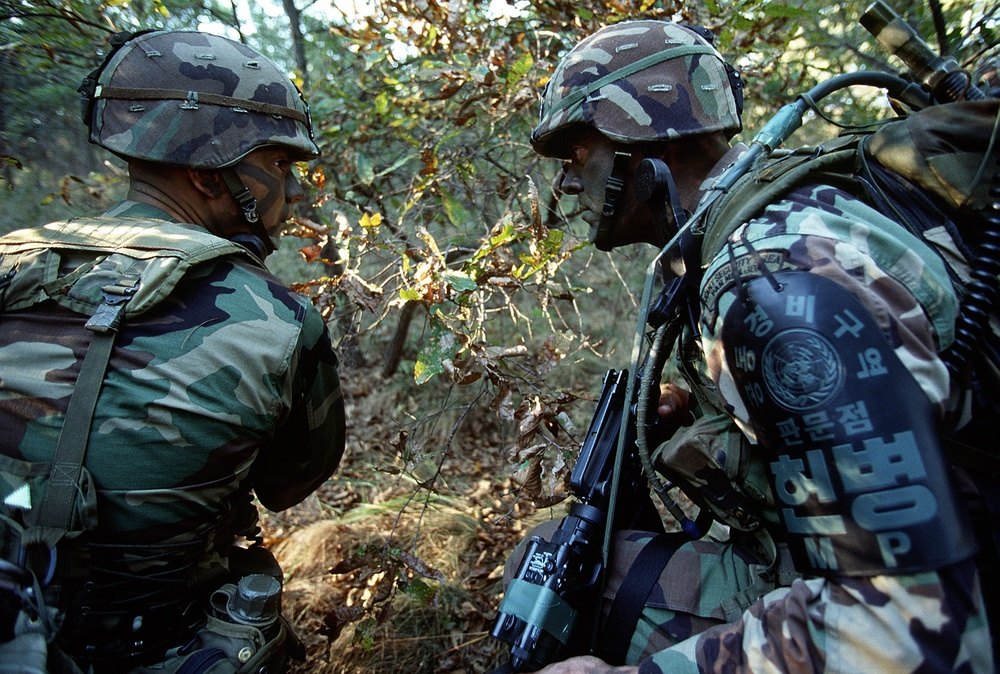
See below for other decorations for which Korea Cold War veterans may be eligible.
Can you request these online?
KDSM: For Army cases handled by NPRC, you can request medal verification online. You can start without finding or mailing your own DD Form 214. NPRC checks the official service record and forwards verified requests for issuance. Start your NPRC online request NPRC instructions
Cold War Recognition Certificate: You can apply by email to HRC, but this is a separate application—not an NPRC online medal request. Send the signed application and copies of official proof of service. A DD Form 214 is one option; another acceptable official record can substitute. Postal mail is optional. Download the application and document requirements HRC application steps
Download the paper records form
Download the Cold War certificate application
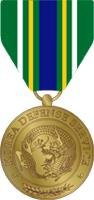

See close-ups of the Korea Defense Service Medal and what its design represents.
Cold War service may also qualify you for the free Cold War Recognition Certificate. The Army Human Resources Command (HRC) program covers Sept. 2, 1945, through Dec. 26, 1991. It recognizes honorable military or federal civilian service, including qualifying Guard and Reserve service. HRC certificate program
U.S. veterans who served in Korea during the Cold War may also qualify for other decorations, depending on their service dates and any qualifying combat. The awards to check include the Armed Forces Expeditionary Medal, National Defense Service Medal, Overseas Service Ribbon, Combat Infantryman Badge, Combat Medical Badge, Purple Heart, Combat Action Ribbon and Prisoner of War Medal. Combat patches, overseas service bars and hostile-fire pay have separate rules. Army awards regulation Navy and Marine Corps personal awards
Who qualifies for the KDSM?
The usual requirement is 30 consecutive or 60 nonconsecutive days in the eligible area: South Korea, surrounding waters out to 12 nautical miles and the airspace above. You do not have to have served in the Demilitarized Zone (DMZ). Army criteria
Qualifying combat, an injury requiring evacuation and certain aircrew service can provide exceptions to the time requirement. Check the full criteria if your service was shorter. Army criteria
How to request a missing KDSM
Can you start the NPRC request without your DD Form 214?
For Army cases handled by NPRC, you can start the online request without obtaining your own DD Form 214 first. Verify your identity and provide the service details NPRC needs to find your file. Ask for verification of your Korea Defense Service Medal eligibility. NPRC reviews the official record and forwards verified Army requests to the service for issuance. Start an online request Required information How NPRC verifies medals
Army service ending before Oct. 1, 2002: Start with NPRC
1. Have your identifying service information ready: the name you used in service, branch, dates of service, service number, Social Security number and birth information, as requested. You can start without your own DD Form 214. The National Personnel Records Center (NPRC) uses this information to locate your records. HRC directs these older Army medal requests to NPRC. Records request requirements HRC routing
2. Open the NPRC online request and complete the required identity verification through ID.me. National Archives instructions
3. Ask for verification of your eligibility for the Korea Defense Service Medal. Give your Korea dates and unit as accurately as you can. NPRC reviews the available service records and forwards verified Army award requests to the service for issuance. For the online request, you do not need to obtain your own DD Form 214 first. Copies of records you already have may help. For a paper request, complete, sign and date Standard Form 180 and follow its mailing instructions. National Archives medal instructions
4. Keep a copy and save the request number. The Archives says to wait 90 days before following up on a records request; then use its status service. Request and status instructions
Later Army service and other branches
1. Check the office responsible for your records. HRC handles later Army cases; Navy, Marine Corps, Air Force and Coast Guard requests follow their own routes. National Archives routing by branch HRC awards branch
2. Send that office a request naming the missing medal, with copies of your discharge and Korea assignment records. For HRC, use the awards contact listed below. HRC contacts Medal request instructions
3. Keep the response and award documentation. If you also need a discharge-record correction, use the service’s correction process. National Archives correction guide
How to get your Cold War Recognition Certificate
Didn’t serve in Korea? You may still be eligible for the Cold War Recognition Certificate. The program covers qualifying U.S. military and federal civilian service in the United States and around the world during the Cold War. HRC eligibility and instructions
The certificate uses a separate process: send HRC the signed application with copies of official proof of service. A DD Form 214 is one option; another official document meeting HRC’s requirements can substitute. NPRC can provide records, but it does not process the certificate application. HRC supporting-document requirements NPRC’s certificate explanation
1. Check your dates and honorable-service evidence against HRC’s rules. At least one qualifying day is required. HRC eligibility
2. Download HRC’s application, complete it and sign and date it. Attach copies of the supporting records and keep your originals.
3. Email the signed application and copies of supporting records to usarmy.knox.hrc.mbx.tagd-awards@army.mil, or mail the packet to the address below. NPRC can supply service records; HRC processes the certificate request. HRC application instructions
USAHRC
Cold War Recognition Program
ATTN: AHRC-PDP-A, Dept 480
1600 Spearhead Division Avenue
Fort Knox, KY 40122-5408
4. Save the submission date and a copy of the packet. HRC lists a minimum two-month mailing turnaround. HRC FAQ
Other awards and combat recognition to check
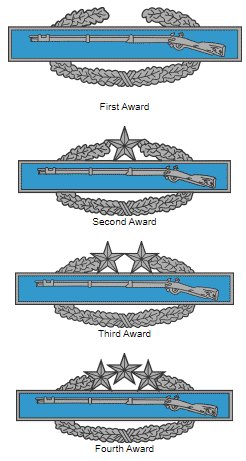

Did you serve in Korea from 1966 to 1974? Check the Armed Forces Expeditionary Medal
Korea is an authorized operation for this medal from Oct. 1, 1966, through June 30, 1974. Veterans who qualified for it in the area later covered by the KDSM can receive both medals for that period. AR 600-8-22, paragraph 2-12g and Table C-3
1. Find records establishing your dates, location and participation in the authorized operation. The date range alone does not replace the medal’s service requirements. AFEM criteria
2. Request verification and issuance through the records office for your branch. Name both the Armed Forces Expeditionary Medal and KDSM if you believe you qualify for both. Request routing
Korea service may count for the National Defense Service Medal
This medal recognizes qualifying service during designated periods, including the Vietnam-era and Gulf War periods. Korea service can count without a Vietnam or Gulf deployment, but the dates and service requirements still apply. Official eligibility periods
1. Compare your service dates and duty status with the official eligibility periods. National Defense Service Medal criteria
2. If the medal is missing, request verification through the records office for your branch. For an NPRC request, provide identifying service information and copies of any supporting records you have. National Archives medal requests NPRC request requirements
The Army made it easier to qualify for a Combat Infantryman Badge in Korea
The Army removed Korea’s extra CIB hurdles in 2005, including requirements for 60 days in the hostile-fire area and five firefights. That made qualification easier for veterans who meet the badge’s core duties, unit and combat requirements. Army account of the change Current Korea exception, paragraph 8-9e(7)
You must have performed qualifying infantry or Special Forces duties in an eligible unit of brigade size or smaller. You must also have been personally present under hostile fire and actively participated in ground combat. HRC criteria
1. Gather your DD Form 214, personnel and assignment records, a dated account of the combat incident and supporting witness statements. The Army’s packet instructions call for two sworn statements and other documentation. AR 600-8-22, Appendix H
2. Explain how you met the duties, unit and combat requirements and why the omission should be corrected. Retroactive CIB rules
3. Submit the veteran’s request to HRC’s Awards and Decorations Branch. Use HRC’s guidance for older cases. CIB application guidance
Older dates need care. The Army’s regulation retains a 1969–1994 Korea entry, while its Korea exception and HRC guidance reach back to 1953. The exception also contains inconsistent July 28/July 29 wording. If those dates affect your case, ask HRC to review the documented service under its Korea exception. Regulation and exception
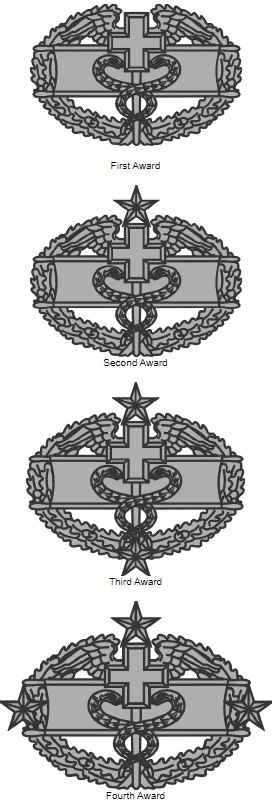
The Army also eased Korea’s Combat Medical Badge rules
The Army also removed Korea’s extra Combat Medical Badge requirements in 2005. Veterans must still establish qualifying medical duties with an eligible unit engaged in ground combat and personal presence under fire. The current regulation permits requests under its Korea exception for service dating to 1953. As with the CIB, its July 28/July 29 wording requires care if your case turns on that date. Army account of the change Current CMB rules and Korea exception, paragraph 8-10
1. Gather personnel and assignment records showing your medical duties, plus a dated incident account and supporting statements. Combat-badge packet
2. Explain how your service met the CMB rules and submit the veteran’s request to HRC. Korea exception and retroactive requests
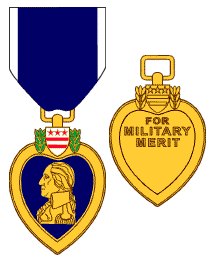
Wounded by enemy fire or an enemy mine? Check the Purple Heart rules
A qualifying wound from enemy or hostile action in post-armistice Korea can support a Purple Heart. Enemy mines can qualify. The Army requires qualifying medical treatment and an official treatment record. HRC Purple Heart criteria
1. Collect medical records and evidence showing when, where and how the hostile wound occurred. HRC documentation requirements
2. Submit the veteran’s request to HRC with the evidence. The Purple Heart has no statutory submission deadline. AR 600-8-22, paragraph 2-7
Navy or Marine Corps veteran? Check the Combat Action Ribbon
Navy and Marine Corps veterans should check their service’s Combat Action Ribbon rules. The Navy’s official history lists a Combat Action Ribbon for USS Pueblo’s Jan. 23, 1968, engagement. Eligibility depends on participation in an authorized action. Navy ship history
1. Find the relevant personal award record or authorized action and evidence of your participation. Marine Corps personal-award guidance
2. Follow your service’s route for a missing award or a new retroactive recommendation. A replacement request and a new award recommendation are different processes. Records routing Marine Corps awards guidance
Held captive? Check the Prisoner of War Medal rules
Former prisoners may qualify when their captivity meets the military’s rules. Official recognition of the status and the circumstances of captivity matter. Official POW Medal guidance
1. Assemble discharge, casualty, captivity and other records supporting the request. Supporting documents
2. Use your service’s awards office or records route to request consideration or a missing medal. Official guidance Records routing
Did your Korea tour qualify for the Overseas Service Ribbon?
A qualifying Army overseas tour can earn this ribbon as well as the KDSM. The ribbon took effect Aug. 1, 1981. Earlier tours require qualifying active Army status on or after that date. HRC Overseas Service Ribbon guidance
1. Obtain records showing your completed Korea tour and overseas tour credit. HRC OSR guidance
2. Ask the custodian of your personnel records to verify the credit, then seek any needed award or record correction. HRC says the records custodian determines tour credit. HRC OSR FAQ
Combat patches, service bars and combat pay
Did your Korea service qualify for a combat patch?
For April 1, 1968, through Aug. 31, 1973, the Army’s Korea rule covers personnel awarded the Purple Heart, CIB or CMB, or who qualified for at least one month of hostile-fire pay in Korea’s hostile-fire area. A separate authorization covers soldiers who participated directly in the Nov. 23, 1984, Panmunjom firefight. AR 670-1, paragraph 21-18
1. Match your dates to the authorization and collect the qualifying award orders, pay or incident records. Patch authorizations
2. Have your service personnel office review the evidence and identify the authorized unit insignia. Use the records correction process if your official record needs correction. Uniform rules Correction process
Six qualifying months can earn an overseas service bar
These sleeve bars are separate from the Overseas Service Ribbon. The Army gives credit for qualifying service in Korea’s designated hostile-fire area from April 1, 1968, through Aug. 31, 1973. Six months of credit earns one bar. AR 670-1, paragraph 21-29
1. Gather assignment and hostile-fire-pay records establishing the months of qualifying service. Service-bar rule
2. Ask the personnel-records office to verify the credit under the Army’s month-counting rules. Service-bar rule
Check the hostile-fire-pay records behind your claim
The Defense Department’s fiscal 1968 report records the designation of Korea north of the Imjin River as a hostile-fire-pay area. Whether an individual qualified depends on the service and pay records. DoD report, Army report page 187
1. Obtain the relevant pay and assignment records. Include them when asking the service to review a patch or service-bar entitlement tied to hostile-fire pay. Army rules Request records
2. Take a claim for unpaid historical pay to the responsible military finance or records office. Ask which records and filing rules apply to that claim; the old area designation alone does not establish a current back-pay entitlement. DFAS pay guidance
The Combat Action Badge does not cover Cold War service
The Army’s Combat Action Badge covers qualifying service beginning Sept. 18, 2001. HRC says it does not cover earlier conflicts, so it cannot be awarded for Cold War service. Veterans seeking recognition for later combat should use HRC’s current CAB application instructions. HRC CAB guidance
Where to send an Army award request
HRC lists the awards email as usarmy.knox.hrc.mbx.tagd-awards@army.mil and this mailing address. Use the instructions for the specific award and send copies of supporting records. HRC awards contacts
U.S. Army Human Resources Command
ATTN: AHRC-PDP-A, Dept 480
1600 Spearhead Division Avenue
Fort Knox, KY 40122-5408
The fighting behind the awards
From 1966 to 1969, U.S. soldiers fought in the conflict often called the “Second Korean War.” A 2010 account published by the Army reports 75 Americans killed in action and 111 wounded in action. Army account
The violence in 1968 and 1969 also reached beyond the “Z”: North Korea seized USS Pueblo in 1968 and shot down a U.S. Navy EC-121 reconnaissance aircraft in 1969. Read our 1966–69 coverage, EC-121 story and account of Washington’s response. Army history, Table 3, page 112
Later clashes also brought combat recognition
The Nov. 23, 1984, Panmunjom firefight is specifically covered by the Army’s combat-patch rule for soldiers who participated directly. Read our 1984 coverage and the story of a participant’s belated Silver Star. AR 670-1, paragraph 21-18
The Aug. 18, 1976, ax attack at Panmunjom also brought Purple Hearts. North Korean soldiers killed Capt. Arthur Bonifas and 1st Lt. Mark Barrett during a tree-trimming detail. An Associated Press report two days later described Gen. Richard Stilwell placing Purple Hearts on their flag-draped caskets. Read our 1976 coverage. Army account of the attack Contemporary AP report, Aug. 20, 1976, page 4
Looking for Agent Orange benefits?
See our Agent Orange guide for Korea veterans.
Questions about Korea medals and the Cold War certificate
Can I request the Korea Defense Service Medal online?
Yes. Army veterans whose cases are handled by NPRC can start a medal-verification request online without first finding or mailing their own DD Form 214. NPRC checks the official record and forwards verified requests to the Army for issuance. Start the request Official instructions
Do I need a DD Form 214 for the Cold War Recognition Certificate?
A DD Form 214 is one acceptable record, but HRC also accepts other official documents meeting its proof-of-service requirements. You must send a signed application and copies of supporting records. HRC permits email submission; this is separate from NPRC’s online medal request. Document requirements Email instructions
Did I have to serve overseas to qualify for the Cold War Recognition Certificate?
No. Qualifying U.S. military and federal civilian service in the United States or overseas can count. The program covers faithful and honorable service from Sept. 2, 1945, through Dec. 26, 1991, including qualifying National Guard and Reserve service. HRC eligibility
Can Cold War service in Korea qualify for a CIB or CMB?
It may. The Army removed the extra Korea requirements, but veterans must still document the applicable infantry or medical duties, eligible unit assignment and combat requirements. Korea service alone does not establish eligibility for either badge. CIB guidance Army awards regulation, Korea exceptions