
What readers ask first
How bare was South Korea after the Korean War?
Official Korean archive material says 58 percent of national forest area was classified as bare mountain land at the worst point in 1956. War damage compounded decades of logging, fuelwood collection, and land pressure.
How many trees did South Korea plant?
South Korean sources commonly report more than 10 billion trees planted from the 1960s through the 1980s. The first national reforestation plan alone recorded about 2.96 billion trees.
What made the program work?
Tree planting was paired with village nurseries, erosion control, enforcement, rural participation, and a switch from fuelwood to coal briquettes and other fuels. Reducing demand for cut wood was as important as producing seedlings.
Are South Korea's forests now secure?
They are dramatically healthier, but many stands are now similar in age. Wildfire, pine wilt disease, climate change, and declining growth rates make active renewal and species diversity the next challenge.
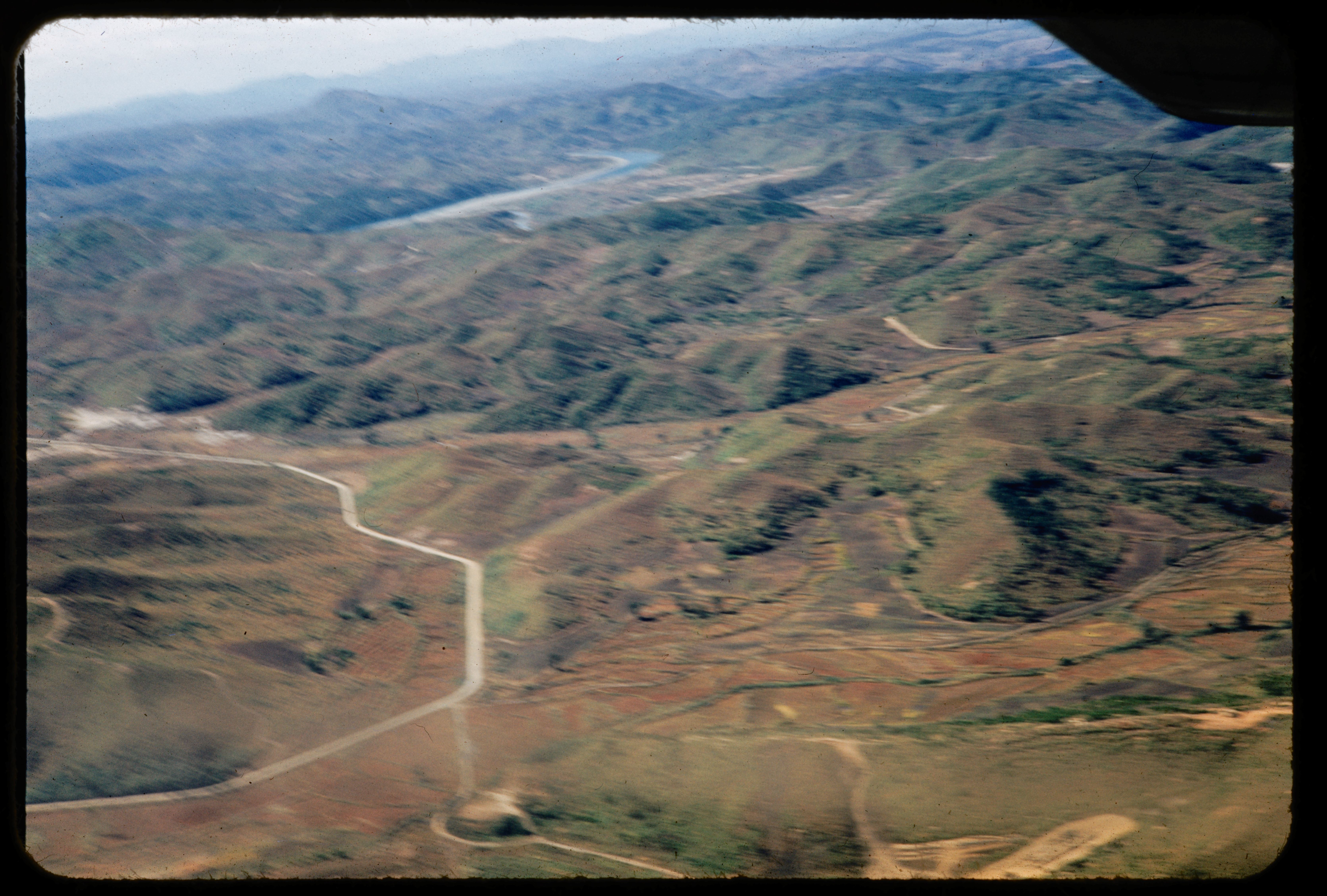
Many veterans remember a peninsula of exposed ridgelines: brown hills, thin scrub, villages burning wood, and winter smoke rising from homes heated through the traditional ondol floor system. The hills visible in South Korea today tell a radically different story.
At the worst point after the war, official archive material says 58 percent of the country's forest area was bare mountain land. Average growing stock stood near 5.7 cubic meters per hectare. By 2020 it had risen to roughly 165 cubic meters per hectare, while forest still covered about 63 percent of the country.
A note on memory: Ondol describes the heating system, not a statistical cause by itself. The forest pressure came from the fuelwood demand that fed household heating and cooking, alongside war damage, logging, erosion, and slash-and-burn farming.
The starting point: a forest crisis
The Korean War accelerated destruction already underway during the colonial period and the turbulent years after 1945. Bombardment, military construction, refugee movements, timber cutting, and desperate household fuel collection left many slopes unable to hold soil or water.
Bare hills were not only an aesthetic loss. They meant floods ran faster, reservoirs filled with silt, topsoil disappeared, rural fuel became scarcer, and rebuilding became harder.
How South Korea made planting stick
The Korea Forest Service was created in 1967. In 1973, authority over the national campaign moved into the Ministry of Home Affairs, giving reforestation unusual administrative reach through provinces, counties, villages, police, schools, and civil-defense organizations.
The first Ten-Year Forest Rehabilitation Plan targeted about 1.08 million hectares. It finished early, reached 108 percent of its area target, and recorded roughly 2.96 billion trees planted. Village nurseries supplied more than a third of the seedlings, turning residents from passive recipients into producers.
Numbers alone do not explain the result. The government built erosion works, restricted cutting, organized planting days, supported nurseries, and expanded fuelwood plantations. Just as important, households moved toward coal briquettes and other fuels. A newly planted hillside could survive only if families no longer needed to cut it for the next winter.
The energy lesson behind the green miracle
Reforestation is often presented as a heroic planting campaign. South Korea's experience suggests a more demanding formula: seedlings plus enforcement plus rural livelihoods plus substitute energy.
Fuelwood plantations expanded rapidly in the 1970s, but the broader economic shift did even more. As commercial energy became available, pressure on nearby slopes fell. Forest policy succeeded because energy policy and development policy changed the demand side of the equation.
You cannot replant a mountain faster than a cold household must cut it—unless that household has another source of heat.
The bill coming due in an aging forest
Success created a new management problem. Korea Forest Service data says 77.2 percent of South Korea's forest area is now occupied by trees 31 years or older. Large areas were planted in a compressed period, often with a limited range of fast-growing species.
That makes the forest more brittle than the green canopy suggests. Pine wilt disease, larger wildfires, drought, and climate-driven range shifts threaten stands that mature at the same time. Red pine habitat around places such as Mount Seorak is projected to contract substantially as conditions warm.
The next chapter is not another simple planting drive. It is thinning, selective harvest, mixed-age regeneration, greater species diversity, fire breaks, pest monitoring, and the difficult work of renewing beloved landscapes before crisis forces the issue.
North of the line: the same equation, fewer resources
North Korea began a second ten-year forest restoration campaign in April 2026, covering 2026 through 2035 and reportedly targeting about two million hectares. Satellite analysis cited by Daily NK estimates roughly 1.22 million hectares of new forest cover since 2015—about 73 percent of the earlier target.
Those gains are meaningful. So are the constraints. Chronic shortages of household energy, arable land, transport, fertilizer, machinery, and local administrative capacity keep pressure on forested slopes. State campaigns can produce seedlings and mobilize labor, but they cannot permanently protect trees if families still need the land for food or the wood for heat.
What the hills remember
South Korea's reforestation was not a single program or a single leader's achievement. It was a decades-long bargain among government capacity, village labor, economic development, new fuels, and millions of households.
For veterans who remember bare ridgelines, the contrast can feel almost impossible. Yet the lesson is practical: degraded landscapes can recover within a human lifetime. Planting starts the process. Energy, incentives, maintenance, and time decide whether the trees remain.
Read the record
- Significance of Korea's forest restoration recordsNational Archives of Korea — Official historical record
- Korean Forests at a GlanceKorea Forest Service — Forest age and industry data
- Reforestation creates a green miracleKorea.net — Official government overview
- North Korea launches second 10-year reforestation driveDaily NK — Satellite-based assessment
- DPRK statement on national forest restorationUnited Nations Forum on Forests