
Seoul: Pyongyang has laid nearly 1 million mines in/around DMZ since 2024
Oct. 25, 2026; DMZ War staff
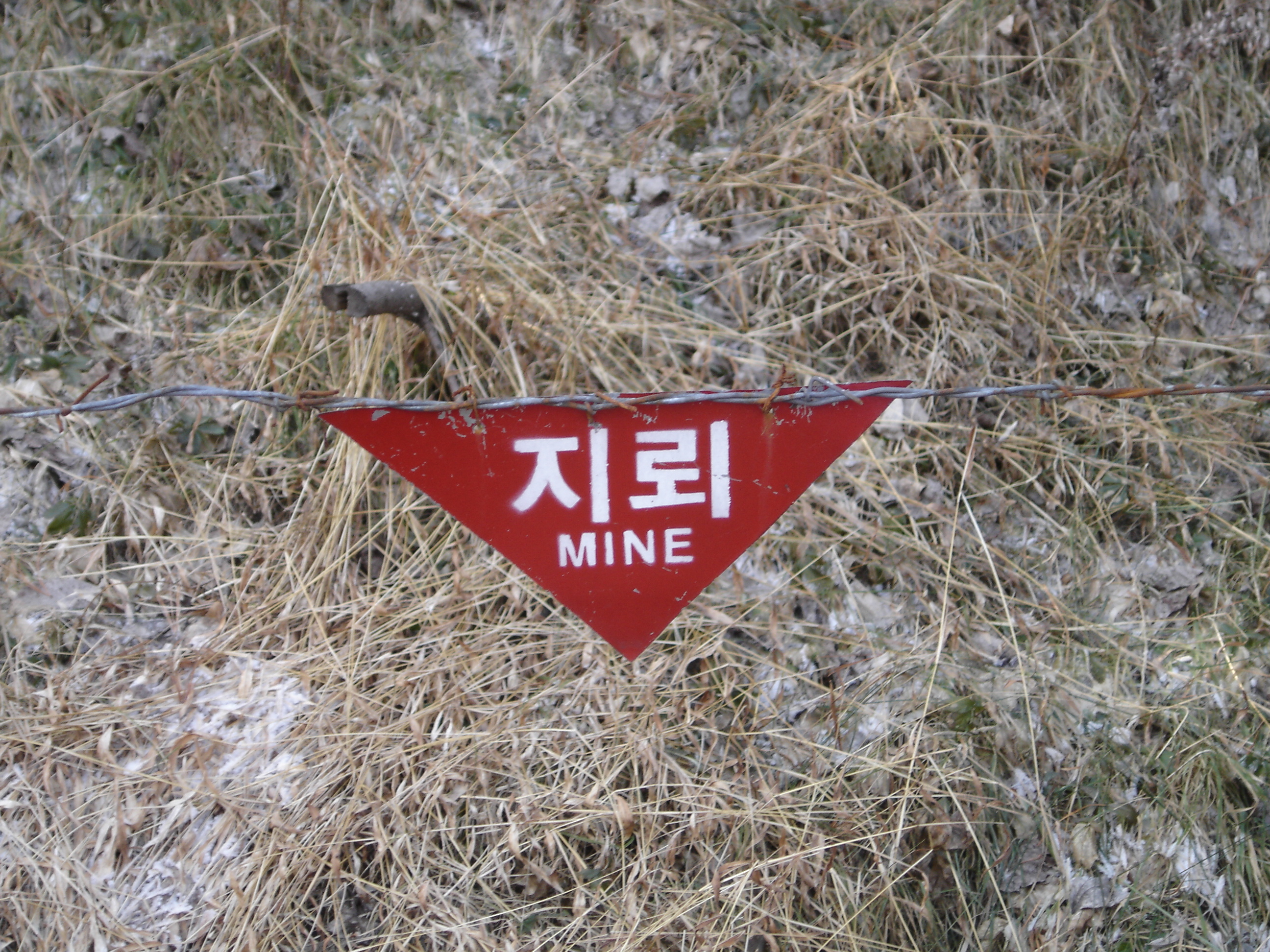
South Korea accuses the North of escalating border tensions with a dramatic increase in the number of landmines in/around the Demilitarized Zone (DMZ). The “Z” is a winding, 4-kilometer-wide buffer separating the two Koreas. The often poorly marked Military Demarcation Line runs down its middle. Seoul blames North Korean mines for Sept. 21 explosions that wounded three ROK soldiers, Yonhap reports. Pyongyang denies responsibility.
Hankyoreh reports the South Korean military submitted its 960,000-mine estimate to the National Assembly. A ROK military official declined to explain how the military calculated the estimate or where the mines were laid.
Seoul’s number is an estimate — and ROK has minefields of its own. A 2024 Mine Action Review report (based on 2021 records) lists about 380,000 mines in the southern “Z” and 389,000 in the civilian-control belt immediately below it.
A ROK Joint Chiefs of Staff official told The Korea Times ROK forces had not laid new mines in the “Z” in response to the buildup. It's unclear whether ROK laid more mines after 2021 but before the North's current campaign.
ROK has proposed military talks to prevent accidental clashes.
The mine dispute has a long history. We covered 2015 blasts that maimed two ROK soldiers; our recent report tracks developments in the landmine dispute.
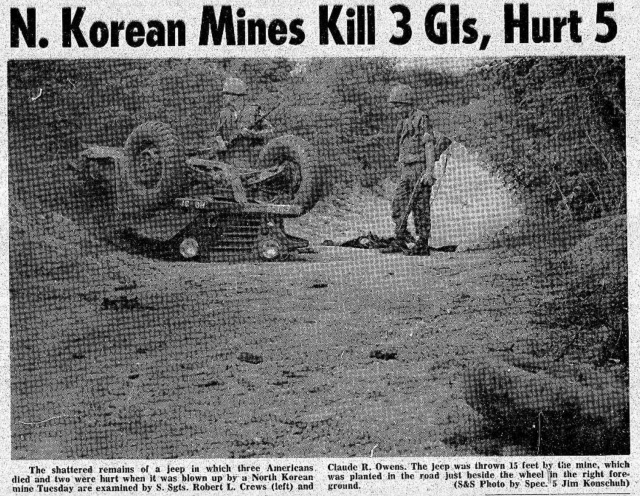
Americans have been killed and wounded by mines, too. An Army history records three killed and five wounded by a mine south of the “Z” on Aug. 29, 1967. An Army medal citation describes a soldier wounded near the “Z” in April 1964. A soldier at Camp Bonifas suffered a leg injury in 2001, Stars and Stripes reported.
We previously reported on President Barack Obama’s 2014 push to join an international ban on antipersonnel mines. His administration sought to join the agreement while retaining mines for South Korea’s defense. The U.S. never joined the Ottawa Treaty, championed by the International Campaign to Ban Landmines, which took effect in 1999. Trump reversed Biden’s mine-use limits in December 2025, The Washington Post reported. U.S. forces could use antipersonnel mines outside the Korean Peninsula.
Kim Yo-jong, the ruling Workers’ Party’s general affairs director and North Korean leader Kim Jong-un’s stern sister, visited the border area Oct. 21 and issued threats. Kyunghyang Shinmun describes her as one of her brother’s closest aides. Our companion report explains her role and the border warnings.
(Created with AI assistance. A human selected the topic, directed the research and writing, and provided editing and quality control.)